June Morris
The Outsider (Stephen King Edition)June Morris is a young witness in the investigation of Frank Peterson’s murder. Her account links Coach Terry to a sighting near a parking lot: June recognizes him from her neighborhood and identifies him again in a photographic lineup, making her confidence a consequential piece of the case even as her testimony describes only what she saw.
Identity and Background
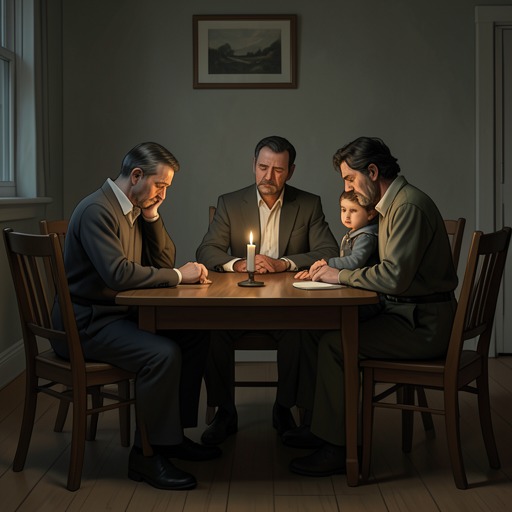
On July 12, June gives a statement to Detective Ralph Anderson at the police station, with her mother, Francine Morris, present. The interview’s conversational opening establishes her as a child witness: Anderson asks about her soda, and June answers that she likes it before asking whether she is in trouble.
June already knows Terry Maitland as Coach Terry, who lives up the street. She explains that he once returned her family’s lost dog. She also knows Grace Maitland, though she says they do not play together much: Grace is a year older and likes boys. These neighborhood connections give June a familiar basis for recognizing the person she reports seeing.
The Sighting
June places her encounter with Coach Terry near a parking lot as she was walking past. Her mother estimates the time as between six and six-thirty, probably around quarter past six: the local news was on when June left, and the weather forecast was likely being shown. June’s account is tied to this ordinary evening routine rather than to a precisely established minute.
June says Terry came out of the trees, noticed her looking at him, and waved. She waved back and asked what had happened. According to her account, he attributed his appearance to a branch hitting him in the face and reassured her that it was only a bloody nose, which he said he got often. He smiled when June remarked that blood would not come out of his shirt, telling her that he had plenty of shirts. June adds that the blood was on his pants and hands as well as his shirt.
Her mother says June had been close to him and admits that she cannot stop thinking about it. June, by contrast, does not treat the sight of blood as inherently frightening: she recalls that a boy at school had once had a bloody nose after falling on the playground, and that she had wanted to offer him her handkerchief. The contrast records both the physical details of the encounter and June’s matter-of-fact response to them.
Identification and Narrative Significance
Near the end of the interview, Anderson turns the questioning into a game. He places six photographs of different people on the table, explaining that they all look somewhat like Coach Terry, and asks June to choose. She promptly selects photograph number four and says that it is Coach Terry.
June’s testimony therefore supplies two connected claims: she encountered a person she knew as Coach Terry near the parking lot, and she later picked Terry Maitland from a group of similar-looking photographs. Her familiarity with him lends weight to the identification, while the account remains bounded by a child’s observation of a brief encounter and the details she can recall. The scene makes recognition—not investigation of the blood or an independent account of what happened before or after—June’s specific contribution to the case.